 ParrotPal
ParrotPal Data · short read
6 in 10 members using GLP-1 medication logged less than 1 g of protein per kg of body weight
Key findings
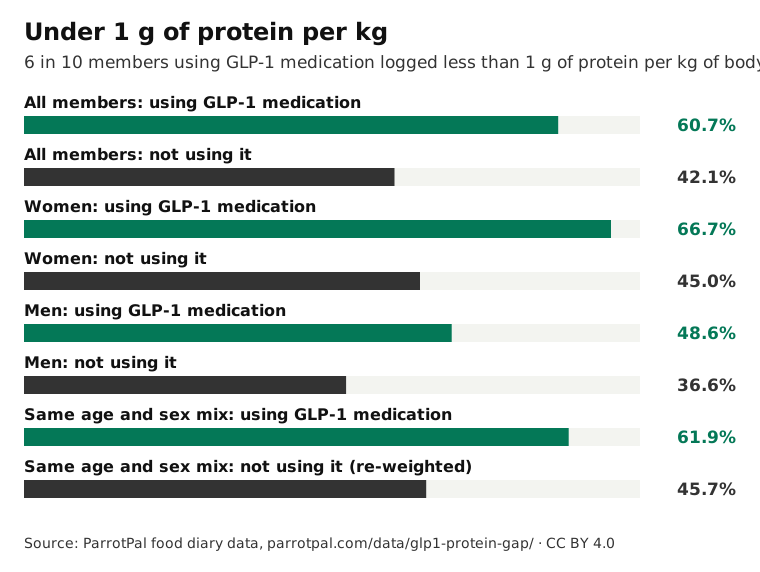
60.7% of ParrotPal members who told us they use GLP-1 medication logged less than 1.0 g of protein per kg of body weight on a typical day, March to August 2026, against 42.1% of members who don’t. Among women it was 66.7% against 45.0%. Source: ParrotPal anonymised food diaries and weigh-ins, more than 250 members using GLP-1 medication.
About 6 in 10 members who told us they use GLP-1 medication (60.7%) logged less than 1 g of protein per kg of body weight on a typical day. Among members who don’t use it, it was about 4 in 10 (42.1%).
60.7%logged under 1 g of protein per kg of body weight
Under 1 g of protein per kg
Share of membersThe gap isn’t explained by who uses these medicines. Members using them are more often women and older, so we re-weighted members who don’t to the same mix of age and sex: 61.9% against 45.7%.
Body weight matters here. Members using GLP-1 medication weighed more (median 90.9 kg against 80.7 kg), which pulls protein per kg down. Measured against weight capped at a healthy BMI of 25 (members who gave a height: more than 100 using GLP-1 medication), 36.0% against 23.3% were still under 1 g per kg.
The typical member using GLP-1 medication logged about 79 g of protein and 1,350 kcal a day, against 84 g and 1,500 kcal. Protein made up the same share of calories (23.7% against 23.0%), so this looks like a smaller day overall, not less protein-rich food.
Against their own app protein target, 24.2% of members using GLP-1 medication reached at least 90% of it on a typical day, against 35.5% (women: 23.8% against 39.7%). Members who said they used to take one looked much the same as current users: 63.5% under 1 g per kg.
Steps follow the same pattern. Among members who share Apple Health steps (1 June to 30 September 2026), the typical member using GLP-1 medication walked about 4,650 steps a day, against 6,350, and 56.3% walked under 5,000 a day, against 33.5%.
We can’t tell from diaries whether anyone lost muscle: food logs don’t measure body composition. These are patterns in what members logged, which isn’t always everything they had, and GLP-1 use is what members told us when they joined.
What this means
When appetite and portions shrink, protein per kilo shrinks with them, even when meals stay just as protein-rich. Research advisers have proposed higher protein targets during weight loss; your prescriber, GP or a dietitian can set one that fits you.
What the research says
In the STEP 1 trial, body scans in a substudy found lean mass made up about 4 in every 10 kilos lost (5.3 kg of 13.6 kg). Lean mass includes muscle, organs and water.
Wilding JPH, Batterham RL, Calanna S, et al. (2021). Once-weekly semaglutide in adults with overweight or obesity. New England Journal of Medicine 384(11):989–1002. doi:10.1056/NEJMoa2032183
In a body-scan substudy of the SURMOUNT-1 trial (160 people), about 75% of the weight lost was fat and 25% lean mass, the same split as in the placebo group.
Look M, Dunn JP, Kushner RF, et al. (2025). Body composition changes during weight reduction with tirzepatide in the SURMOUNT-1 study of adults with obesity or overweight. Diabetes, Obesity and Metabolism 27(5):2720–2729. doi:10.1111/dom.16275
A 2025 joint advisory from four US nutrition and obesity societies notes that higher protein targets, such as 1.2–1.6 g per kg a day, have been proposed during active weight reduction (or an absolute 80–120 g a day), and that protein intake in adults should not fall below 0.4–0.5 g per kg a day.
Mozaffarian D, Agarwal M, Aggarwal M, et al. (2025). Nutritional priorities to support GLP-1 therapy for obesity: a joint advisory from the American College of Lifestyle Medicine, the American Society for Nutrition, the Obesity Medicine Association, and The Obesity Society. Obesity 33(8):1475–1503. doi:10.1002/oby.24336
Research describes other groups of people; our figures are what ParrotPal members logged.
The figures
| Members with a weigh-in | Using GLP-1 medication | Not using it |
|---|---|---|
| All members | 60.7% | 42.1% |
| Women | 66.7% | 45.0% |
| Men (a smaller group) | 48.6% | 36.6% |
| Same age and sex mix (non-users re-weighted) | 61.9% | 45.7% |
| Group size, all members | more than 250 | more than 1,000 |
| Protein per kg of body weight, typical day | Using GLP-1 medication | Not using it |
|---|---|---|
| Under 0.8 g | 39.9% | 23.5% |
| Under 1.0 g | 60.7% | 42.1% |
| 1.2 to 1.6 g | 18.1% | 24.6% |
| 1.6 g or more | 5.4% | 12.8% |
| Median, g per kg | 0.89 | 1.08 |
Method in brief. ParrotPal members’ anonymised food diaries, 1 March to 31 August 2026, members in every country. A counted day has 3 or more entries and 300 to 6,000 kcal; members need 7 or more counted days; deleted entries don’t count. GLP-1 use is each member’s latest answer to our sign-up question; “not using it” means they said they weren’t using any. Weight is each member’s median weigh-in in the window. Groups: more than 500 members using GLP-1 medication logged food, more than 250 of them with a weigh-in, against more than 1,000 members who don’t with a weigh-in. Medians are approximate (within about 1%).
Aggregates only: every group shown has 50 or more members and no share rests on fewer than 10. Patterns in what members logged, not causes. who’s counted · the 50/10 rule · logged isn’t eaten.
Full report: Muscle loss and GLP-1 medication: our guide.
Questions people ask
How much protein do people using GLP-1 medication log?
In ParrotPal food diaries, March to August 2026, the typical member who told us they use GLP-1 medication logged about 79 g of protein a day, and 60.7% logged less than 1 g per kg of body weight.
Do I need more protein on GLP-1 medication?
We can’t answer that for you. Research advisers have proposed 1.2 to 1.6 g per kg a day during active weight loss. Your prescriber, GP or a dietitian can set a target that fits you, and our protein calculator gives a starting number.
Does this show members lost muscle?
No. Food diaries don’t measure body composition. Trials with body scans have found that lean mass makes up part of the weight lost; our figures only show what members logged.
Cite this
Free to use with credit and a link to the source page. The figures and chart are licensed CC BY 4.0.
Credit line
Source: ParrotPal food diary data, parrotpal.com/data/glp1-protein-gap/
Citation
ParrotPal (2026). 6 in 10 members using GLP-1 medication logged less than 1 g of protein per kg of body weight. ParrotPal Data. https://parrotpal.com/data/glp1-protein-gap/. Licensed CC BY 4.0.
Embed the chart (an image with the credit link)
<figure><img src="https://parrotpal.com/data/glp1-protein-gap/chart.svg" alt="Under 1 g of protein per kg: chart by ParrotPal" width="760" style="max-width:100%;height:auto" /><figcaption>Source: <a href="https://parrotpal.com/data/glp1-protein-gap/">ParrotPal food diary data</a> (CC BY 4.0)</figcaption></figure>
Download the chart (SVG) · The figures (CSV)
Press questions, a comment or a chart in your house style: the ParrotPal team, jacqui+press@parrotpal.com. All our data pages: ParrotPal Data.
Work out your own number with the protein calculator, then keep track of it in ParrotPal: 4.7★ on the App Store · iPhone. Get it on the App Store
Please read. This page reports patterns in anonymised, aggregated app data. This page is general information, not medical advice. It isn’t tailored to you and doesn’t replace advice from your prescriber, GP or dietitian. Talk to your prescriber, GP or pharmacist about what’s right for you.
ParrotPal doesn’t sell, supply or recommend any medicine. GLP-1 use is what members told us when they joined.