 ParrotPal
ParrotPal Data · short read
1 in 6 women over 45 who joined ParrotPal said they were using GLP-1 medication
Key findings
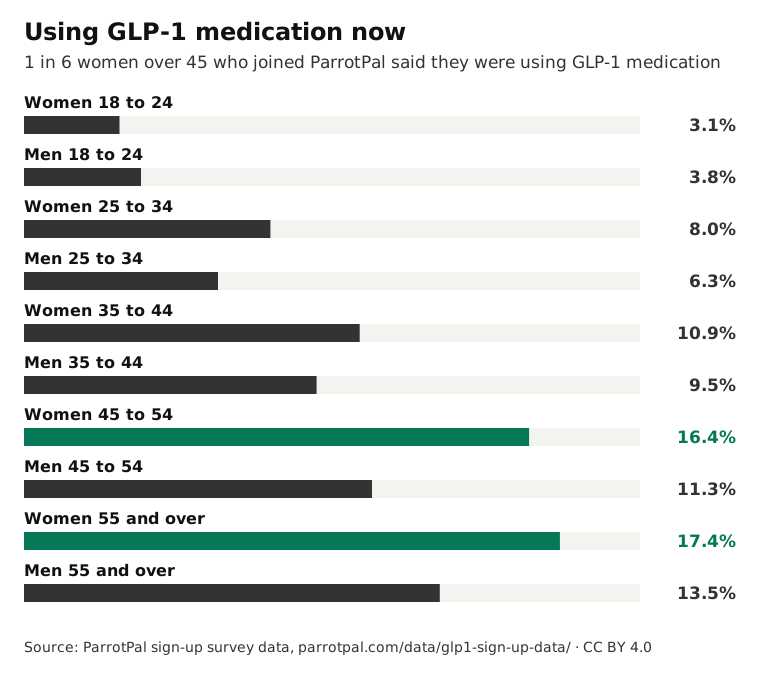
10.6% of people who joined ParrotPal between November 2025 and September 2026 said they were using GLP-1 medication. Among women it was 11.5%, rising to 16.4% at 45 to 54 and 17.4% at 55 and over. Source: ParrotPal sign-up answers, more than 5,000 members answering. Not a population estimate.
About 1 in 6 women aged 45 and over who joined ParrotPal said they were using GLP-1 medication: 16.4% at 45 to 54 and 17.4% at 55 and over. Across everyone who joined, it was 10.6%.
1 in 6women 45 and over said they were using GLP-1 medication when they joined
Using GLP-1 medication now
Share of new membersUse rose with age for both sexes and was higher in women: 11.5% of women against 8.3% of men. Another 5.4% said they had used one before and 4.9% that they were thinking about it. Members whose app is set to UK time: 11.3% using now.
Many start the app early on. Of members on medication who answered an earlier version of our question (June to December 2025), 30.1% had been taking it for less than a month and 25.7% for one to three months.
In that earlier question, members could name their medicine. Of those naming one (more than 2,500), 64.8% named tirzepatide and 35.2% semaglutide. The tirzepatide share went from 77.8% of answers in June 2025 to 50.2% in November 2025. This describes which medicine members named, nothing about how well any medicine works.
These are a weight-management app’s sign-ups, not the UK population: people joining ParrotPal are more likely than average to be trying to lose weight. Answers are self-reported and may have changed since.
What this means
GLP-1 medication is now part of everyday weight management for a meaningful share of people who join a food app, and most of all for women in mid-life. That’s the same shape a national survey found.
What the research says
A nationally representative survey (January to March 2025) estimated that about 1.6 million adults in Great Britain had used one of these medicines to support weight loss in the past year. Use and interest were more common among women and people in mid-life.
Jackson SE, Brown J, Llewellyn C, et al. (2026). Prevalence of use and interest in using glucagon-like peptide-1 receptor agonists for weight loss: a population study in Great Britain. BMC Medicine 24(1):1. doi:10.1186/s12916-025-04528-7
Research describes other groups of people; our figures are what ParrotPal members logged.
The figures
| Age | Women | Men |
|---|---|---|
| 18 to 24 | 3.1% | 3.8% |
| 25 to 34 | 8.0% | 6.3% |
| 35 to 44 | 10.9% | 9.5% |
| 45 to 54 | 16.4% | 11.3% |
| 55 and over | 17.4% | 13.5% |
| Members answering | more than 5,000 | more than 5,000 |
Method in brief. Answers to ParrotPal’s sign-up question, November 2025 to September 2026 (“I’m using one now”, “I’ve used one before”, “I’m not using any” or thinking about it), members in every country; each member’s latest answer. Time on medication and medicine names come from the earlier question set, June to December 2025. Internal and test accounts are left out.
Aggregates only: every group shown has 50 or more members and no share rests on fewer than 10. Patterns in what members logged, not causes. who’s counted · the 50/10 rule.
Questions people ask
How many people use GLP-1 medication in the UK?
A nationally representative survey estimated about 1.6 million adults in Great Britain used one to support weight loss in the year to early 2025 (Jackson and colleagues, BMC Medicine, 2026). Our figures are app sign-ups, not a population estimate.
Who is most likely to use GLP-1 medication?
Among people joining ParrotPal, women aged 55 and over (17.4%) and 45 to 54 (16.4%) were most likely to say they were using it.
Cite this
Free to use with credit and a link to the source page. The figures and chart are licensed CC BY 4.0.
Credit line
Source: ParrotPal sign-up survey data, parrotpal.com/data/glp1-sign-up-data/
Citation
ParrotPal (2026). 1 in 6 women over 45 who joined ParrotPal said they were using GLP-1 medication. ParrotPal Data. https://parrotpal.com/data/glp1-sign-up-data/. Licensed CC BY 4.0.
Embed the chart (an image with the credit link)
<figure><img src="https://parrotpal.com/data/glp1-sign-up-data/chart.svg" alt="Using GLP-1 medication now: chart by ParrotPal" width="760" style="max-width:100%;height:auto" /><figcaption>Source: <a href="https://parrotpal.com/data/glp1-sign-up-data/">ParrotPal sign-up survey data</a> (CC BY 4.0)</figcaption></figure>
Download the chart (SVG) · The figures (CSV)
Press questions, a comment or a chart in your house style: the ParrotPal team, jacqui+press@parrotpal.com. All our data pages: ParrotPal Data.
Please read. This page reports patterns in anonymised, aggregated app data. This page is general information, not medical advice. It isn’t tailored to you and doesn’t replace advice from your prescriber, GP or dietitian. Talk to your prescriber, GP or pharmacist about what’s right for you.
ParrotPal doesn’t sell, supply or recommend any medicine. GLP-1 use is what members told us when they joined.